As a fulltime orchestra musician you always look out for the ‘new’ schedule which states what we will be playing in the coming months. Much happiness when your favorite piece is coming up or something you haven’t played before and you’re keen to play it. 🙌🏻🫶
Less happiness when you see a ‘shoulder killer’ ….. 🫣 😩
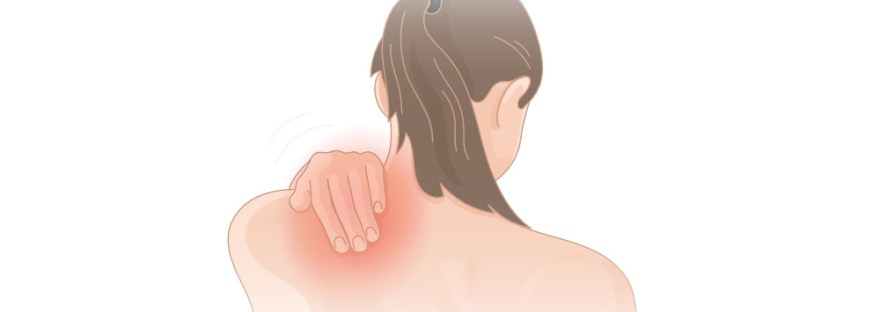
What is a ‘shoulder killer’ you ask … A shoulder killer is one of those pieces or programs where most of us string players will come out with one or more overworked muscles which can lead to a full on, have to go on sick leave, eina injury. (eina means very painful in South Africa 😉).
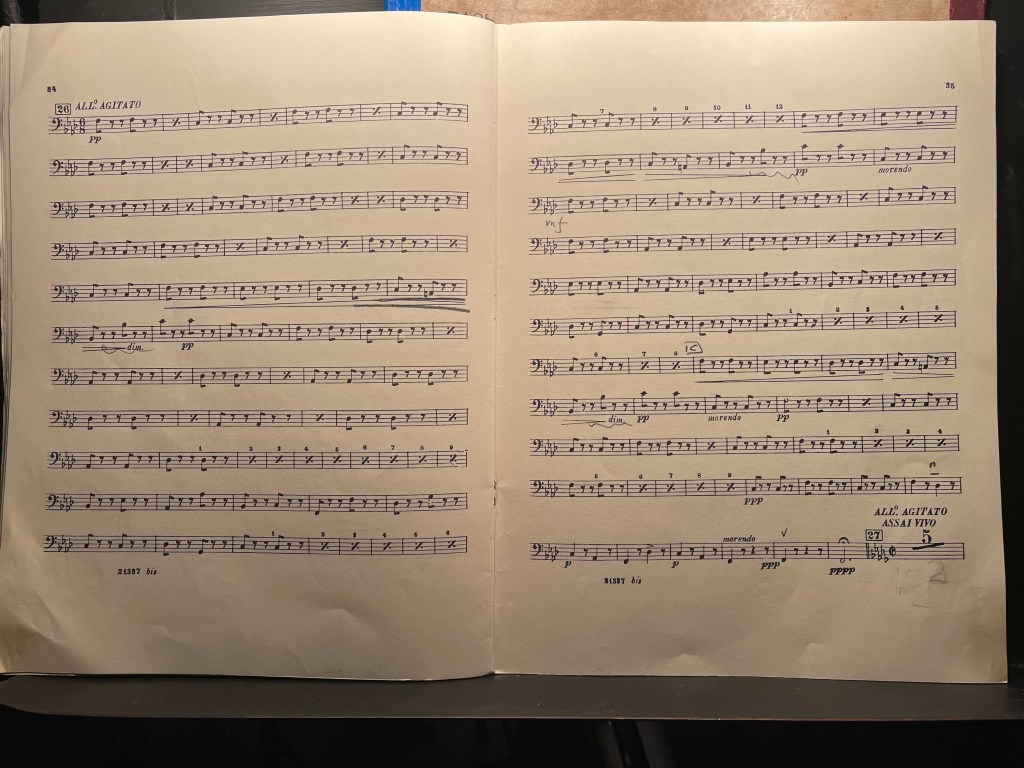
Now you might think a shoulder killer would be a piece with a lot of notes and lots of fortissimos, but you would be wrong. The opposite is the case. Slow, soft and few notes without any open strings for minutes on end will do it!
From a bass player (my) perspective a lot of notes is lovely, it keeps the muscles warm and going and when things get loud normally the brass kicks in and you won’t hear us anyway so you can chill a bit during rehearsals and go for it at the concert.
When things are soft and slow and notes come to quick in succession to rest your arm and it’s ongoing for minutes on end and you are the oem of the oem-cha-cha (and therefor it’s quite important you play 😬) that’s when it gets tricky. The ‘cha-cha’ players (the violas mostly) are also suffering and start lowering their instruments eventually, left elbows start drooping, continuous moving around to find a new position of your arm and shoulder so you can last another couple minutes without feeling ‘the burn’. It’s like those endurance challenges at “Survivor©“.
‘The burn’. This is not the lovely ‘burn’ that Jane Fonda refers to in her workout videos where you are burning your glutes and feel like you’re loosing weight and getting incredibly stronger while doing it. 💪🏻 No, this is a burn that can lead to tendinitis, injury and bad body posture and doesn’t go away with a day or 2 of rest.
Why am I writing about this this week? Yes, you’ve guessed it, we’re in the middle of a shoulder killing 2 weeks … La Traviata by Verdi 🥴
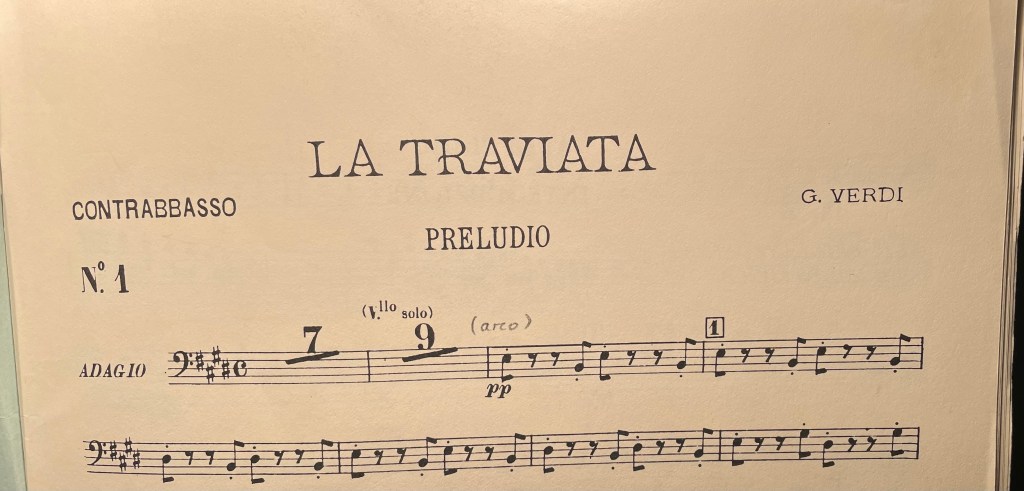
Such beautiful music, but with any opera by Verdi I brace myself and hope for the best. Questions pop in my head like: Why do singers always have to sing in a key with 3/4/5 flats??? Why 2 verses? Why does it take at least 10 minutes for the lead singer to die?? Why??? Eina eina eina 😩😩😩
We got through all the double sessions with rehearsals (2 casts, so play everything twice in one day… 🫣). Now we are playing through one time only for 4 performances so there will be more rest time in between 🙌🏻.
It’s a sold out production which is great in these times. People love the opera and they will be absolutely mesmerised by both casts (and will never noticed the aches and pains going on in the pit 😉).
To be continued … 🙂

 Roxane Steffen